2026-11-19
[Historic Tooth Preservation] The Process of Saving a Tooth Slated for Extraction Due to Tartar and Bacteria #Replantation #ToothPreservation #DrChoiYongHun
A dentist's case study on saving a molar slated for extraction due to tartar and bacteria via extraoral treatment, replantation, and regeneration injections.
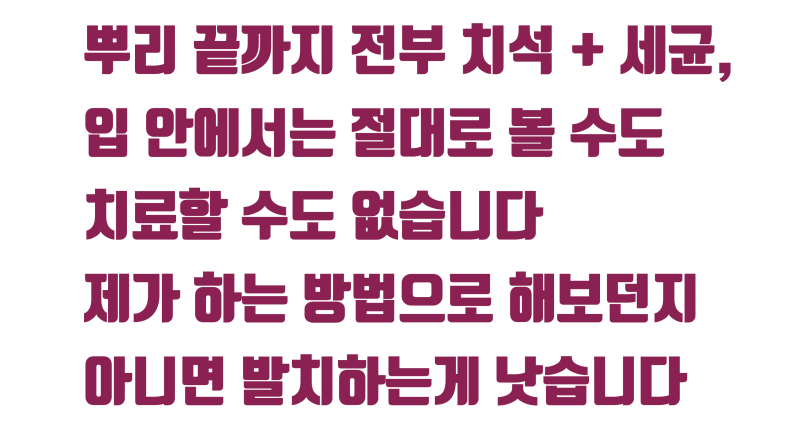
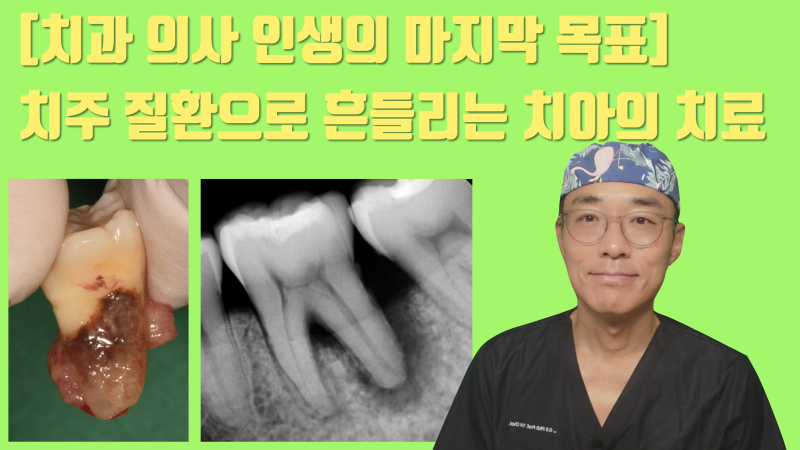
When dentists see this,
Wow! This actually works? Amazing!
It's an unbelievable case.
This case polarizes opinion.
Personally, I hope many dentists will study it and take on the challenge...
So why do I take on this kind of tooth treatment?
It's true that the alveolar bone is often severely damaged, but when you look at the actual teeth,
In some cases the alveolar bone is indeed destroyed, but in many others, healthy periodontal ligament remains.
The periodontal ligament is an extremely important tissue that connects the tooth root to the alveolar bone.
A healthy tooth has 100% of its periodontal ligament intact, but in cases of gum disease, the periodontal ligament is often reduced to around 50–70%.
When this happens, the teeth become loose and the gums bleed.
Many of these patients have had gum treatment at a dental clinic, but the relief is only temporary and the problem keeps coming back. Eventually they are told a tooth needs to be extracted, and that's when they come to see me.
Unfortunately, not every loose tooth can be saved. T_T
There need to be at least two non-loose teeth next to it.
A female patient in her 40s visited with a damaged tooth and recurring swelling.
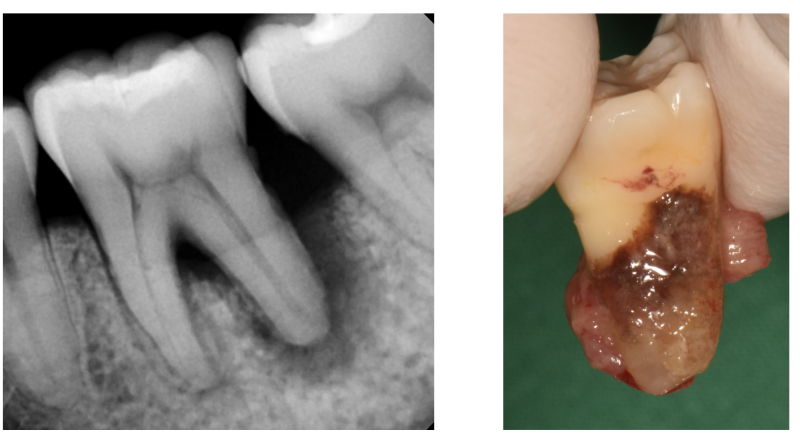
This patient was incredibly fortunate in one way:
the lower molar was heavily coated in tartar and bacteria, causing pain and discomfort,
but the teeth in front of and behind it were stable and healthy.
In a way, the treatment process is simple and satisfying.
We begin by numbing the area around the tooth with painless anesthesia,
so the patient doesn't feel when the injection starts,
and we make sure no pain is felt during the extraction.
Preparation takes about 10–15 minutes.
Extracting a tooth affected by periodontal disease is simple,
and this patient asked, “Is it already out?”
The patient then rests comfortably with gauze between their teeth,
while my team and I begin treating the extracted tooth in earnest.
Because all treatment is done outside the mouth,
I'm confident this is the most comfortable form of dental treatment.
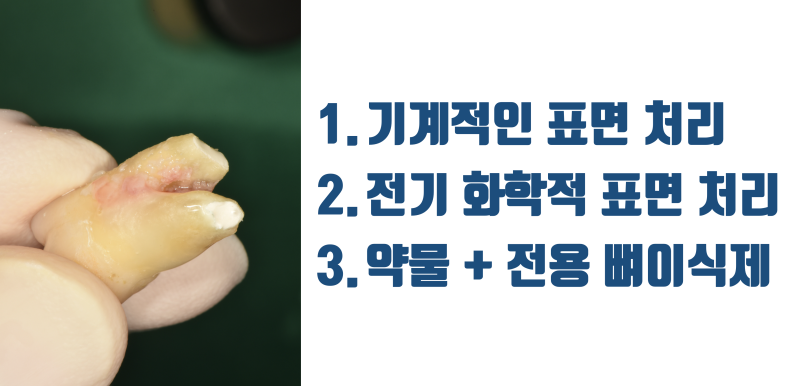
We process the extracted tooth outside the mouth:
Mechanical removal of tartar and bacteria
Electrochemical treatment of the root surface
Replantation using a proprietary recipe that combines bone graft material with tissue regeneration factors
Tissue regeneration injection therapy, given about 4–6 times
Steps 1 through 3 are done on the day of treatment and take about 30 minutes.
The process goes like this: extraction with the mouth open, extraoral treatment with the mouth closed, then replantation with the mouth open again.
The patient only needs to keep their mouth open for about 3–5 minutes.
After treatment, I personally explain the aftercare instructions, and the patient goes home.
You might expect pain once the anesthesia wears off, but since all the inflammation that had been troubling this tooth has been removed,
patients often feel more relief than pain, and that feels good.
Daily life can resume right away, and patients can drive themselves home.
They come back for a check-up one week later, and that's when regeneration injection therapy begins.
You might think injection therapy would hurt,
but the process is exactly the same as the painless anesthesia process.
It starts without the patient noticing when, and it's over once the required amount of medication has been delivered.
It takes less than 5 minutes.
The sensation is exactly the same as being numbed for anesthesia.
After that, patients receive about 4–6 regeneration injection sessions, then wait about three months.
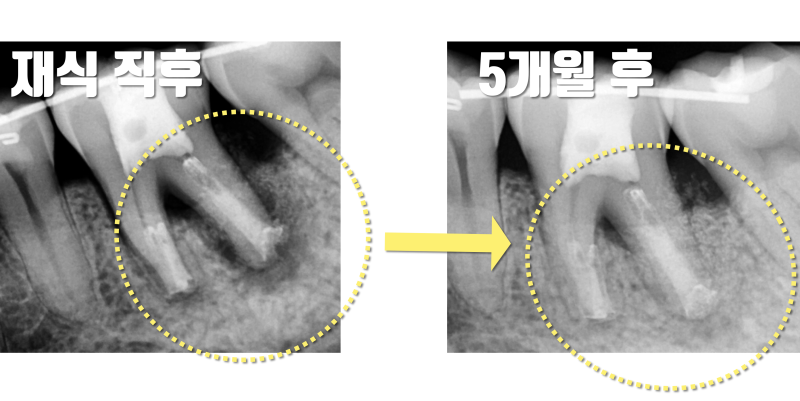
The patient, who badly wanted to save the tooth, says it now feels very comfortable...
Patients like this are often happy simply to keep their tooth rather than lose it.
Many are glad just to have tried treatment,
and when the results are satisfying too, their happiness is even greater.
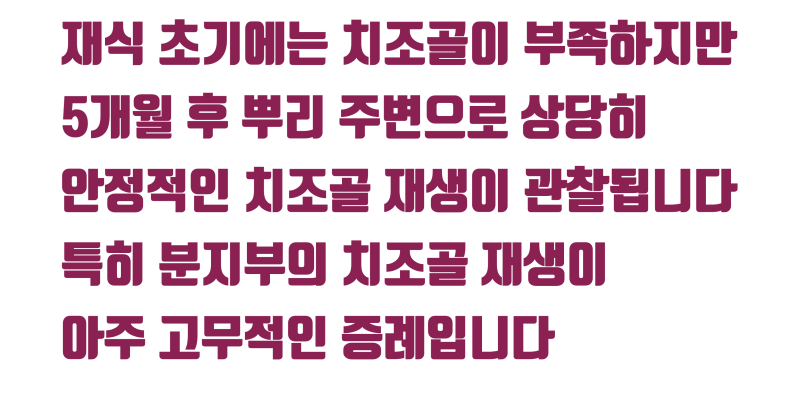
Looking at the X-rays, I was really surprised too:
the grafted alveolar bone has settled in stably.
The recurring gum inflammation that used to cause so much trouble is gone,
and recovery has been good enough that the patient can chew with it again.
The wire will stay in place a bit longer for safety, and it causes little discomfort.
That's because it's much smaller than the large wires some people wear for years during orthodontic treatment.
Whether to add bonded ceramic later will be decided together with the patient, as needed.
The earlier treatment begins, before the alveolar bone is badly damaged, the better the results. ^^
That's all.
In Korea, implants are the standard treatment.
Saving teeth is not an easy or simple treatment.
Also, once a tooth passes a certain point of damage, it can no longer be saved.
Cases with multiple missing teeth or multiple loose teeth are difficult to treat with the tooth-saving approach I use.
I recommend watching my blog and YouTube channel thoroughly and checking whether your case fits.
Dr. Choi Yong-hun clinic introduction video: https://www.youtube.com/watch?v=YCiCJLrG1J8
#CrackTooth #Replantation #ToothReplantation #FracturedToothReplantation #PeriodontalDiseaseReplantation #DrChoiYongHun #ToothSaving
Frequently Asked Questions
Can every loose tooth be saved?
No, not every loose tooth can be saved. The author explains that there need to be at least two non-loose teeth next to the affected tooth, and that the approach is difficult to apply when multiple teeth are missing or loose. The author also notes that a tooth cannot be saved once it passes a certain threshold of damage.
What is the order of the replantation procedure after extraction?
The extracted tooth is treated outside the mouth and then replanted. Outside the mouth, tartar and bacteria are removed and the root surface is treated. The tooth is then replanted using a mixture of bone graft material and tissue regeneration factors. Afterward, patients receive about 4–6 regeneration injection sessions and then wait roughly three months, according to the author.
Is there pain during the treatment?
The author explains that painless anesthesia is used so that no pain is felt during extraction. Regeneration injections take less than five minutes, and the sensation is the same as that of anesthesia. The author adds that because the inflammation has been removed, patients feel more relief than pain even after the anesthesia wears off.
Can I resume daily activities or drive after treatment?
Yes. The author says daily activities can resume right away and patients can drive themselves home. After treatment, the author personally explains the aftercare instructions before the patient goes home, and the patient returns for a check-up one week later.
Why do teeth become loose in cases of gum disease?
The author explains that teeth become loose as the periodontal ligament diminishes. The periodontal ligament is the tissue that connects the tooth root to the alveolar bone. While a healthy tooth retains 100% of its periodontal ligament, in cases of gum disease it is often reduced to around 50–70%. This leads to loosening and gum bleeding, and if the problem recurs, patients are eventually told the tooth must be extracted.