2026-10-23
Why Your Dentist Asks You to Thank Your Parents and Tell Them You Love Them #ToothReplantation #DrChoiYonghun
A dentist shares the story of a patient in their 60s whose broken molar could not be saved, and explains why we should thank our parents for healthy teeth.
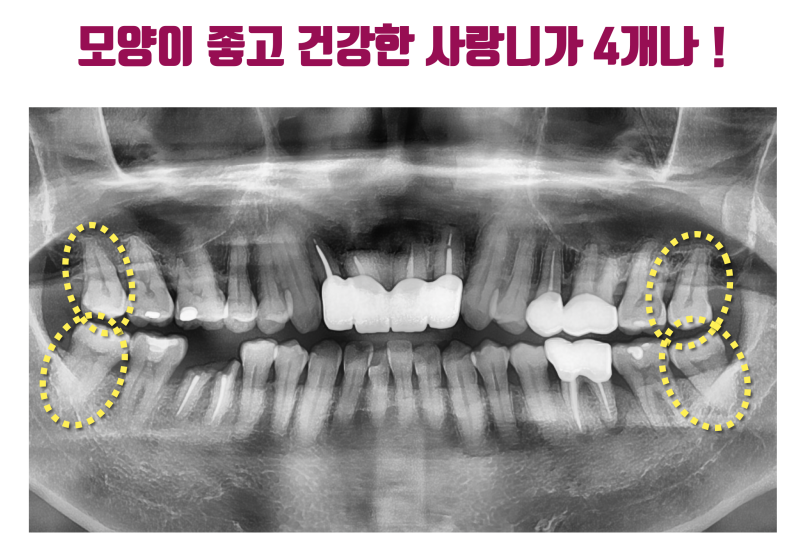

Nobody goes through life without worrying about their teeth.
I have had a dental implant myself, and there are still a few areas that need attention. Like you, I sometimes feel anxious.
None of us gets to choose the body we are born with.
And much of what we inherit comes from our parents through genes.
This is a story about a patient in their 60s whom I met recently.
A lower molar had broken, and they wanted to save it. After asking around, they came to see me...
Their teeth were so healthy that it was hard to believe they were in their 60s.
Unfortunately, the broken tooth could not be saved...
But they had as many as four wisdom teeth that were healthy and beautifully shaped.
Whenever I see beautiful wisdom teeth like these, I always tell my patients
to thank their parents.
Wisdom teeth this beautiful and well-formed cannot be found anywhere else in the world.
This patient in their 60s had four wisdom teeth with lovely shapes,
so we decided to go ahead with a wisdom tooth transplant right away, without hesitation.
They had been very reluctant to get an implant, and they had four wisdom teeth inherited from their parents.
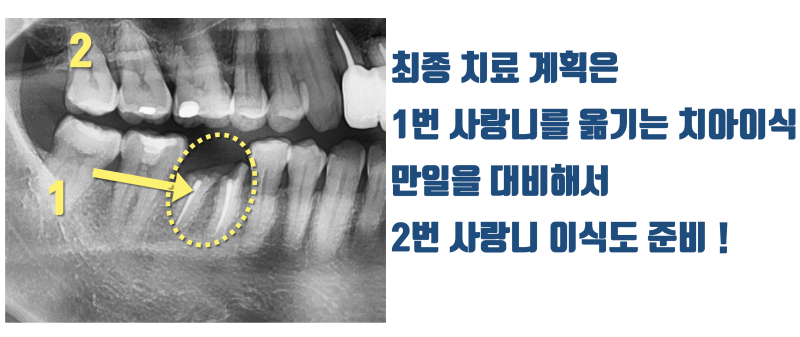
Having four wisdom teeth in good shape and condition means that you still have as many as four chances for treatment.
It's also hard for things to go seriously wrong.
At this point, some of you may be thinking, "But I don't have any wisdom teeth."
We tend to think of our weak points and bad qualities first...
Just as it is hard for you to win the lottery,
conversely, it is also hard to become extremely unhappy.
If you are prone to cavities,
in most cases your gums are strong.
That means you inherited strong gums and alveolar bone.
There are also people who are born with a natural resistance to cavities.
In both cases, you have every reason to thank your parents.
Most people did inherit good dental genes from their parents.
No one is perfect, but everyone is born with strengths.
Please make good use of the strengths you received from your parents.
If you are prone to cavities, your gums are strong, so avoid root canal treatment as much as possible,
remove as little tooth structure as you can, and keep as much of your natural tooth as possible.
If you rarely get cavities, keep up good care through your 30s and 40s to maintain your natural teeth.
If you rarely get cavities but your gums are a little concerning,
get regular gum care and keep up with maintenance,
avoid hard and chewy foods, and do your best to maintain your current alveolar bone.
If your wisdom teeth have come in nicely and cause no discomfort, it's best to keep them into your 50s and even 60s.
Choosing not to get a wisdom tooth transplant and being unable to get one because you have no wisdom teeth are worlds apart.
So many young patients have had the wisdom teeth they received from their parents pulled out, and then regretted it.
It breaks my heart every time I talk with them.
Each of you reading this post is precious and valuable.
You may have a few shortcomings, but most of you inherited good genes and healthy natural teeth from your parents.
What matters is what you do from here on.
How about taking a moment today to thank your parents for passing down healthy teeth to you?
#ToothTransplant #WisdomToothTransplant #ToothReplantation #DrChoiYonghun #SaveYourTeeth
Frequently Asked Questions
What is a wisdom tooth transplant?
In the article, a wisdom tooth transplant is presented as an option when a molar has broken and cannot be saved, and a healthy wisdom tooth is used instead. The patient in their 60s did not want an implant, and since they had four wisdom teeth in good shape, they decided to go ahead with a wisdom tooth transplant right away.
How should I care for my teeth if I'm prone to cavities?
The article explains that if you are prone to cavities, your gums are usually strong, so it's best to avoid root canal treatment as much as possible and remove as little tooth structure as you can to keep your natural teeth intact. It also conveys the message of protecting your natural teeth by making the most of the strengths you inherited from your parents.
What should I do if I don't have cavities but my gums are a concern?
The article explains that if you rarely get cavities but your gums feel unstable, you should get regular gum care and keep up with maintenance. It also advises avoiding hard and chewy foods and doing your best to maintain your current alveolar bone.
How long should I keep my wisdom teeth?
The article explains that if your wisdom teeth have come in nicely and cause no discomfort, it's best to keep them into your 50s and 60s. It also notes that many young patients regret having their wisdom teeth pulled out, which the author finds unfortunate.
Can I still get a wisdom tooth transplant if I don't have any wisdom teeth?
No, a wisdom tooth transplant is not possible without wisdom teeth. The article describes the difference between choosing not to transplant a wisdom tooth and being unable to do so because you have none as worlds apart.