2026-09-13
A Trip to Japan to Find Textbooks on Tooth Replantation and Autotransplantation
A dental specialist visits Tokyo to acquire advanced textbooks on tooth replantation and autotransplantation, reflecting on his journey to save cracked and compromised teeth without extraction.
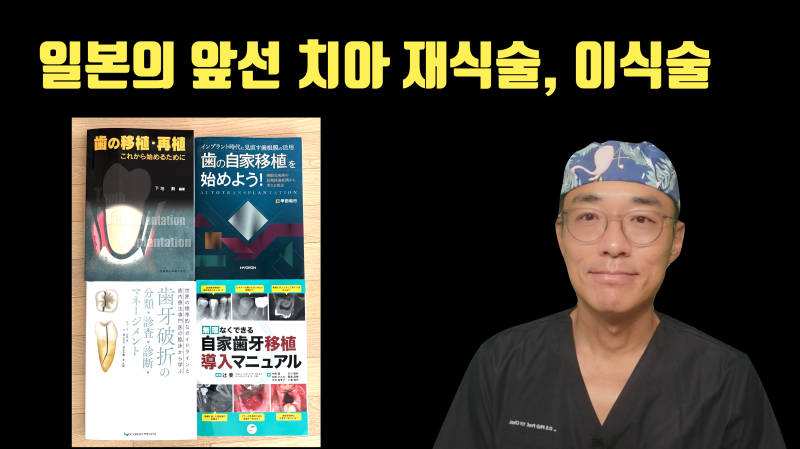
I first started performing tooth intentional replantation in 2008 after taking up my post at Seoul National University Bundang Hospital.
At the time, so many teeth were failing to receive an accurate diagnosis,
patients were repeating open-ended, futile treatments that solved nothing,
and teeth that seemed salvageable were deemed hopeless and extracted.
Looking back now, it was an embarrassing and utterly chaotic era, though somewhat unavoidable back then.
I didn't initially set out to focus on replantation either.
However, to resolve those two dilemmas, there was simply no other way than to extract the tooth and examine it directly under direct visualization.
Naturally, that led me into the world of intentional replantation, where I have remained ever since.
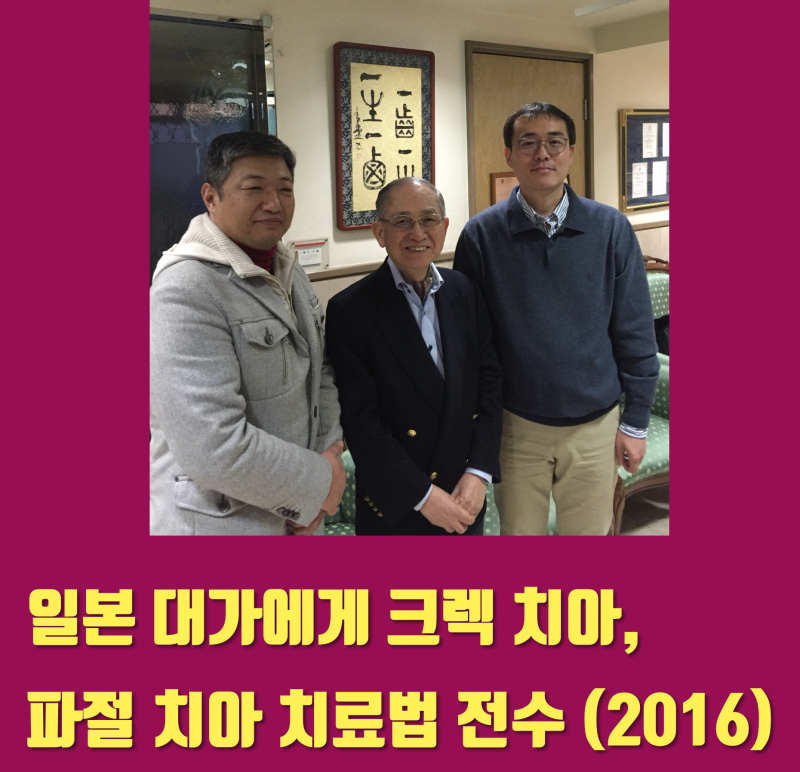
In 2016, I received truly invaluable knowledge and clinical insights from two Japanese mentors.
This is significant because
even today, the Korean dental community often considers extraction to be the only answer for cracked teeth.
Back then, when I encountered a crack, I didn't know what else to do either—I'd perform meaningless palliative treatments
and merely pray that things would somehow get better.
When I went to Japan, however, I was astounded to discover that they had been treating cracked and fractured teeth since the 1980s.
Now, treating and saving cracked or fractured teeth has become second nature to me.
Tragically, during the COVID-19 pandemic,
both of the Japanese dental masters pictured, who had passed their craft on to me, passed away.
Suddenly, I felt entirely alone.
I wanted to keep advancing and take on even more challenging cases through updated knowledge, diverse clinical experiences, and peer discussions,
yet books became my only remaining resource.
Studying the original texts is always ideal (as it avoids translator bias or lack of clinical expertise),
and Japan is virtually the only country in the world that produces textbooks dedicated to tooth autotransplantation and intentional replantation.
The only hurdle was that I do not know a word of Japanese.
Thankfully, living in the era of AI makes things incredibly convenient!
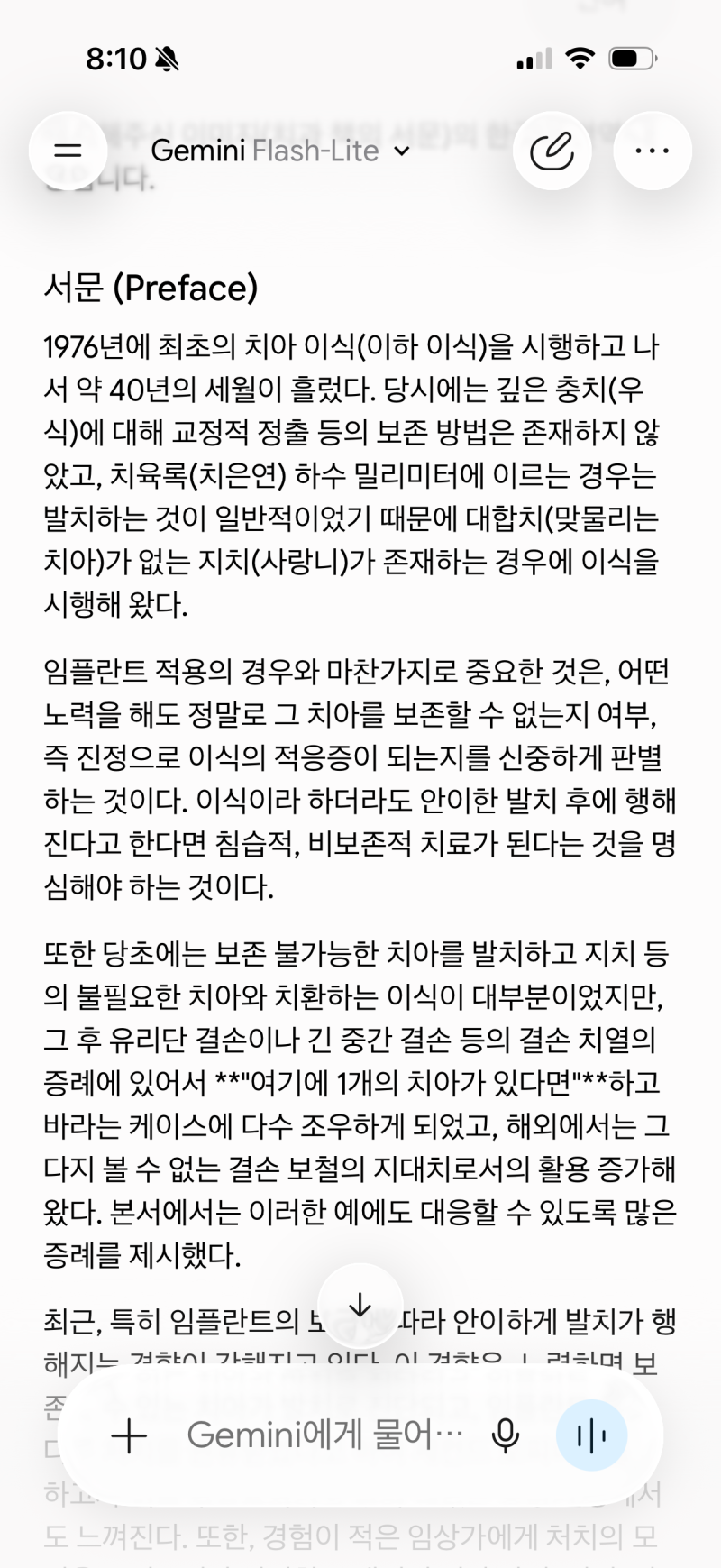
Simply taking a photo of a page translates it instantly.
I took a quick trip to Tokyo yesterday. Caught in a torrential downpour halfway through, my shoes were completely soaked, but after quite an ordeal, I managed to purchase the books.
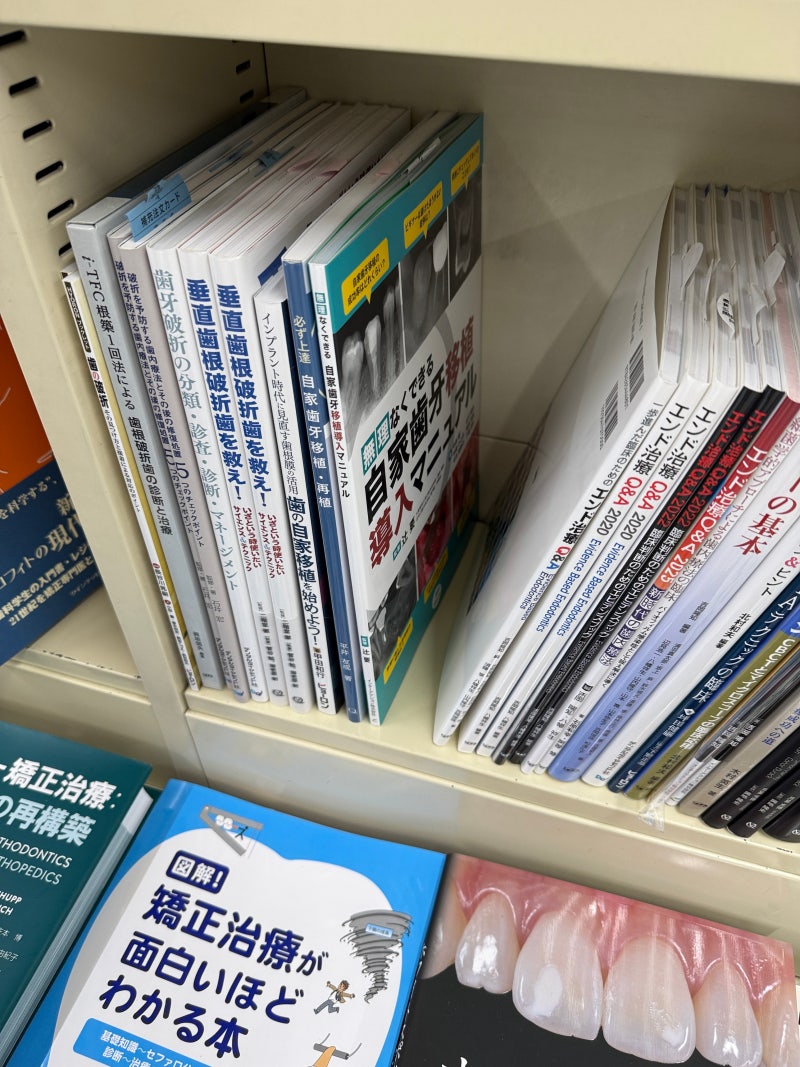
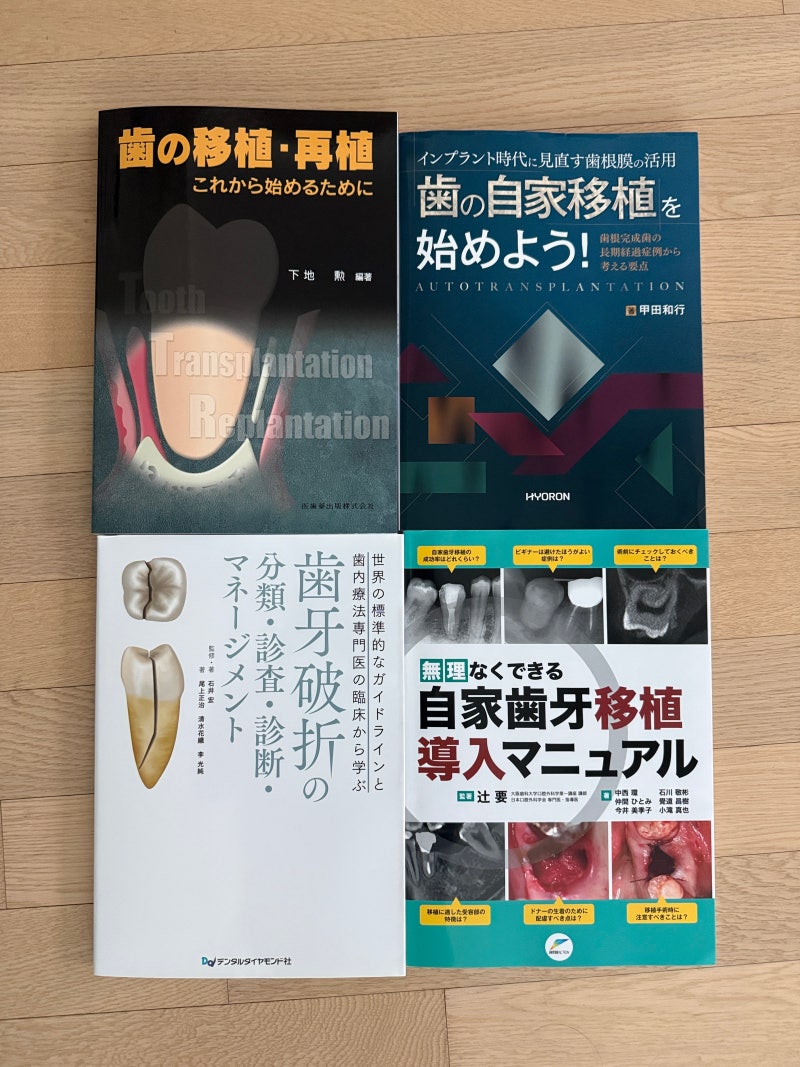
These volumes are written by Japanese masters who have dedicated at least 20 years exclusively to transplantation and replantation.
True to the renowned tenacity and diligence of Japanese clinicians, cases with over 20 years of follow-up are abundant throughout the pages.
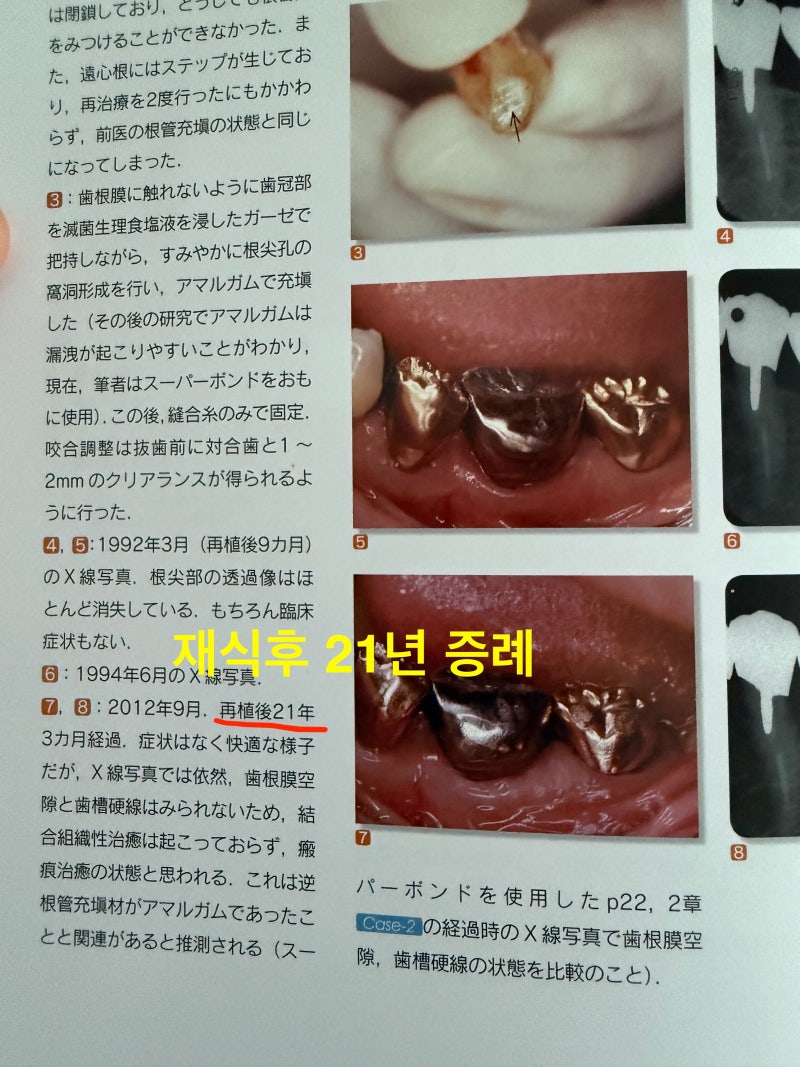
Remarkably, these cases—dating back to the 1990s when techniques, equipment, and materials were far more limited—have maintained stability for over two decades.
Comparing the resources available then to what we have today is like comparing a landline telephone to a modern smartphone.
I sincerely hope a strong movement toward preserving natural teeth catches on in Korea as well.
As with all complex procedures, intentional replantation and autotransplantation are exceptionally delicate treatments.
It is frustrating to see people attempt just a handful of cases and act as though they have mastered it all.
Even after nearly 20 years of focusing almost exclusively on this discipline,
I still find room for improvement and continue to discover things I never knew before.
In fact, I sheepishly confess that much of what I wrote in my own past book has evolved so much that I advise colleagues not to rely on it anymore.
For instance, materials like MTA mentioned in my book have now been replaced entirely with newer, superior materials.
Slightly exaggerating, traveling from Seoul to Tokyo doesn't feel that much different from traveling from Seoul to Busan.
Whenever time permits, I plan to make regular trips to Japan.
Since my sole purpose is buying books, even day trips are more than feasible.
The reason I remain so dedicated to replantation
is that, in treating compromised teeth, one ultimately arrives at the conclusion: you have to look at the tooth directly to truly treat it.
When you can actually see the tooth outside the mouth, almost every underlying issue can be resolved.
Our clinic focuses primarily on saving severely compromised natural teeth that have been condemned to extraction.
We do not provide implant consultations or implant procedures of any kind.
We also do not offer routine dental treatments or general checkups. We kindly ask for your understanding.
#ToothReplantation #CrackedTooth #FracturedTooth #DrChoiYongHoon #SavingNaturalTeeth #WisdomToothTransplantation
Frequently Asked Questions
Does a cracked or broken tooth always require extraction?
No. Extraction is not always necessary, and the tooth can often be saved. While cracked or fractured teeth are frequently diagnosed as hopeless and slated for extraction in Korea, advanced procedures like intentional replantation allow clinicians to directly inspect and repair the tooth to preserve it.
What is tooth intentional replantation?
Tooth intentional replantation is a procedure where a problematic or difficult-to-treat tooth is gently extracted, repaired and treated outside the mouth under direct visualization, and then replanted back into its socket. This enables direct, microscopic examination and precise management of cracks, root canals, or root-end lesions.
Are tooth replantation and autotransplantation common procedures?
No, they are highly intricate treatments requiring exceptional skill and clinical expertise. Tooth replantation and autotransplantation demand extensive long-term experience along with continuous research into updated materials and techniques to safely and predictably save natural teeth.
Does your clinic provide dental implant consultations or routine checkups?
No, we do not. Our clinic does not offer any implant consultations or procedures. Furthermore, we do not perform general cleanings, routine fillings, or standard checkups; our practice is exclusively dedicated to preserving compromised natural teeth that have been advised for extraction.