2026-11-12
[Anesthesia Is a Must, Not an Option] Why You Should Get Numbed Whenever Any Pain Is Expected #PainFreeAnesthesia #ToothSaving #DrChoiYonghun
The author argues that dental anesthesia is essential whenever pain is expected during treatment, since endured pain can lead to lasting atypical toothache that medical treatment cannot fix.
Honestly, this post will be hard for you to find through search anyway (unless Naver's AI really goes above and beyond...)
This is dental expertise I want to share with those who regularly visit my blog.
If dentists read this post, they'll probably think:
'What nonsense. If it doesn't hurt, why bother with anesthesia?'
Well, fair enough...
This is a topic that will draw two completely opposite reactions.
Some will make the excuse (?) that they skip anesthesia because the shot itself hurts. I'll address that solution later on.
It's complicated if I explain it at length, so I'll keep it as brief as possible.
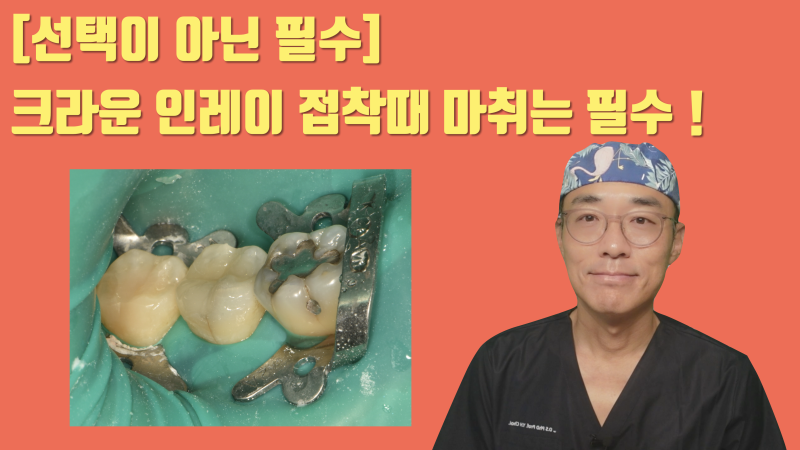
Put simply, anesthesia is often skipped on the day a crown is placed on a tooth that has already had root canal treatment.
The reasoning is that the tooth has already had root canal treatment, so it has no sensation...
The tooth itself may be numb, but the gums around it are very much still sensitive.
Removing the adhesive and touching the gums hurts!
And tapping a temporary crown repeatedly to knock it off hurts too!
Unless you have truly godlike hands that keep the patient from feeling anything without anesthesia,
it's going to hurt.
So what if it hurts?
Well, you just grit your teeth and bear it, right?
If the patient endures the pain and gets treated, everybody's happy.
The problem is that it would be fine if this pain were endured and then passed with no aftereffects,
but aftereffects can happen.
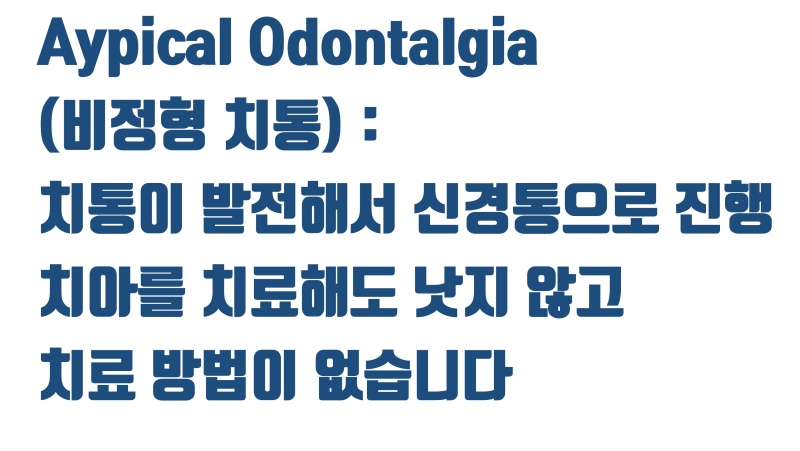
This is called
atypical toothache (Atypical Odontalgia).
If a patient feels pain that crosses a certain threshold during dental treatment,
something goes wrong in your nervous system,
and from that point on, pain with no identifiable cause begins.
This is called atypical odontalgia (atypical toothache).
It comes from a slip-up while treating the tooth,
and the real problem is that there's no way to fix it!
Once this develops, the pain won't go away even if you treat the tooth.
That's because it's a problem with the nervous system.
In fact, removing a temporarily cemented crown hurt terribly, and since then there are patients who keep coming to me saying their tooth still hurts.
I'll be honest with you.
If a replantation happens to fix it, you're lucky,
but if it's atypical toothache, replantation won't fix it.
So you're left to make that call.
I can't do anything about this, so I'm telling it to you exactly as it is.
Not every bit of pain during dental treatment turns into atypical toothache,
but if you're unlucky and experience pain that crosses a certain threshold, atypical toothache can develop,
and there's no treatment for it.
Some people improve with medication, but others may have to live with the discomfort indefinitely.
Because there's no treatment, this is the scariest part.
And even setting that aside,
you're paying for your own treatment, so why on earth would you endure pain just to get it done?
If it hurts during treatment, just say so and get anesthesia. That solves the problem.
Atypical toothache doesn't develop when you're under anesthesia.
Atypical toothache is the vicious cycle that begins when a patient feels pain beyond a certain level.
As I always say, the goal of anesthesia
is for it to take effect so gently, like seeping in, that you can't tell when it was given,
and for the numbness to be so complete that you feel no pain during treatment.
That is the goal of dental anesthesia,
and the clearest sign that it has worked well
is when the treatment is over, the patient gets up, and asks, 'Did you give me anesthesia today?'
I've said that before.
Replantation and autotransplanting wisdom teeth are all fine,
but I feel the greatest sense of fulfillment and satisfaction when I can treat someone without pain.
That's my personal take.
I believe it makes no sense to do a neat, good job on treatment if the patient is in pain.
To everyone reading this,
I hope you'll help build a dental culture where you're willing to invest adequate money and time to get treated without pain.
When people try to cut costs or save time, the first thing they cut is anesthesia.
Sure, it'll hurt a little, and you could still get treated that way,
but I hope you also know about the risks that can come afterward.
Which treatment to perform is the dentist's decision,
and which treatment to receive is the patient's decision.
No one is forcing anyone to do it this way or that way.
Everything in life is a choice.
That's all.
In Korea, implants are the default treatment.
Saving a tooth is not a simple or easy treatment.
Also, once a tooth passes a certain point, it can't be saved.
Cases with multiple missing teeth or multiple loose teeth are difficult to treat with the tooth-saving approach I practice.
I'd recommend watching my blog and YouTube videos thoroughly and checking whether you fall into this category.
Dr. Choi Yong-hun Clinic Introduction Video: https://www.youtube.com/watch?v=YCiCJLrG1J8
#PainFreeDentalAnesthesia #PainFreeAnesthesia #PeriodontalLigamentAnesthesia #CrackedTooth #Replantation #ToothReplantation #FracturedToothReplantation #PeriodontalDiseaseReplantation #DrChoiYonghun #ToothSaving
Frequently Asked Questions
Do I really need anesthesia if dental treatment won't hurt?
The author argues that anesthesia is necessary whenever pain is expected during treatment. Even for a tooth that has had root canal treatment, the surrounding gums still have sensation, so pain can occur while removing crown adhesive or taking off a temporary crown.
Can a tooth that has had root canal treatment still hurt during treatment?
Yes. A tooth that has had root canal treatment has no sensation, but the surrounding gums do, so pain can still occur. The author explains that the gums can become painful while crown adhesive is being removed or a temporary crown is being taken off.
What is atypical toothache, and why does it happen?
According to the article, atypical toothache develops after a patient experiences pain that goes beyond a certain threshold during dental treatment. It is a condition in which pain with no identifiable cause does not go away even with dental treatment. The author explains that because it originates in the nervous system, there is no clear cure, though some people do improve with medication.
What is the purpose of dental anesthesia?
The purpose of anesthesia is to keep you from feeling pain during treatment. The author says the best outcome is when the numbness sets in so gradually that you can't tell it was given.
What are the risks of skipping anesthesia during dental treatment?
According to the article, enduring pain during treatment carries the risk of lingering pain, namely atypical toothache. The author notes that even a replantation may not resolve it, and says they hope patients will choose with an understanding of the risks that follow skipping anesthesia.
Is tooth-saving treatment possible if multiple teeth are missing or loose?
The author explains that the tooth-saving treatment they practice is difficult to apply when multiple teeth are missing or multiple teeth are loose. They say that once a tooth passes a certain point, it can't be saved, and they mention that implants are the default treatment in Korea.